Back
Movie Lamp

Movie Lamp

A movie database platform designed to reduce decision fatigue and provide personalized recommendations.

Project Overview

Movie Lamp is a movie database platform designed to solve the fundamental frustration viewers face when trying to choose what to watch. While digital platforms provide unprecedented access to vast film libraries, their core systems for discovery and recommendation are flawed, leading to wasted time and unsatisfactory experiences.

The process of selecting a movie has become a significant source of frustration. Streaming services prioritize their own affiliated content, limiting genuine choice. Users face overwhelming choice and decision fatigue, often spending more time browsing than actually watching. Aggregated ratings from sites like IMDb or Rotten Tomatoes are often unreliable indicators of personal enjoyment.

Our solution focuses on three key innovations:

  • A dissected rating system that breaks down movie quality into Story, Visuals, and Enjoyment metrics
  • A taste profile with trust meters that puts users in control of their recommendations
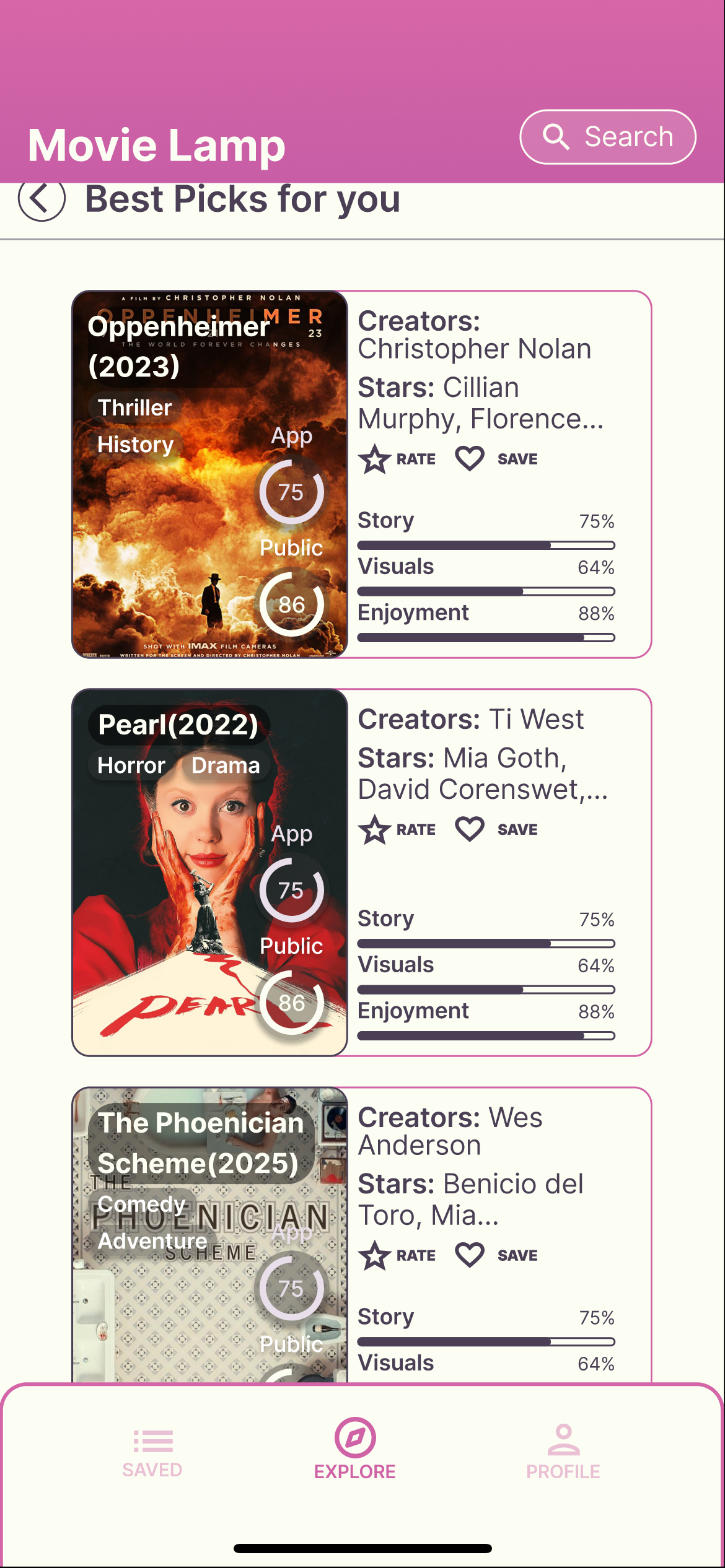
  • The "Movie Lamp" feature that narrows thousands of options down to three curated picks
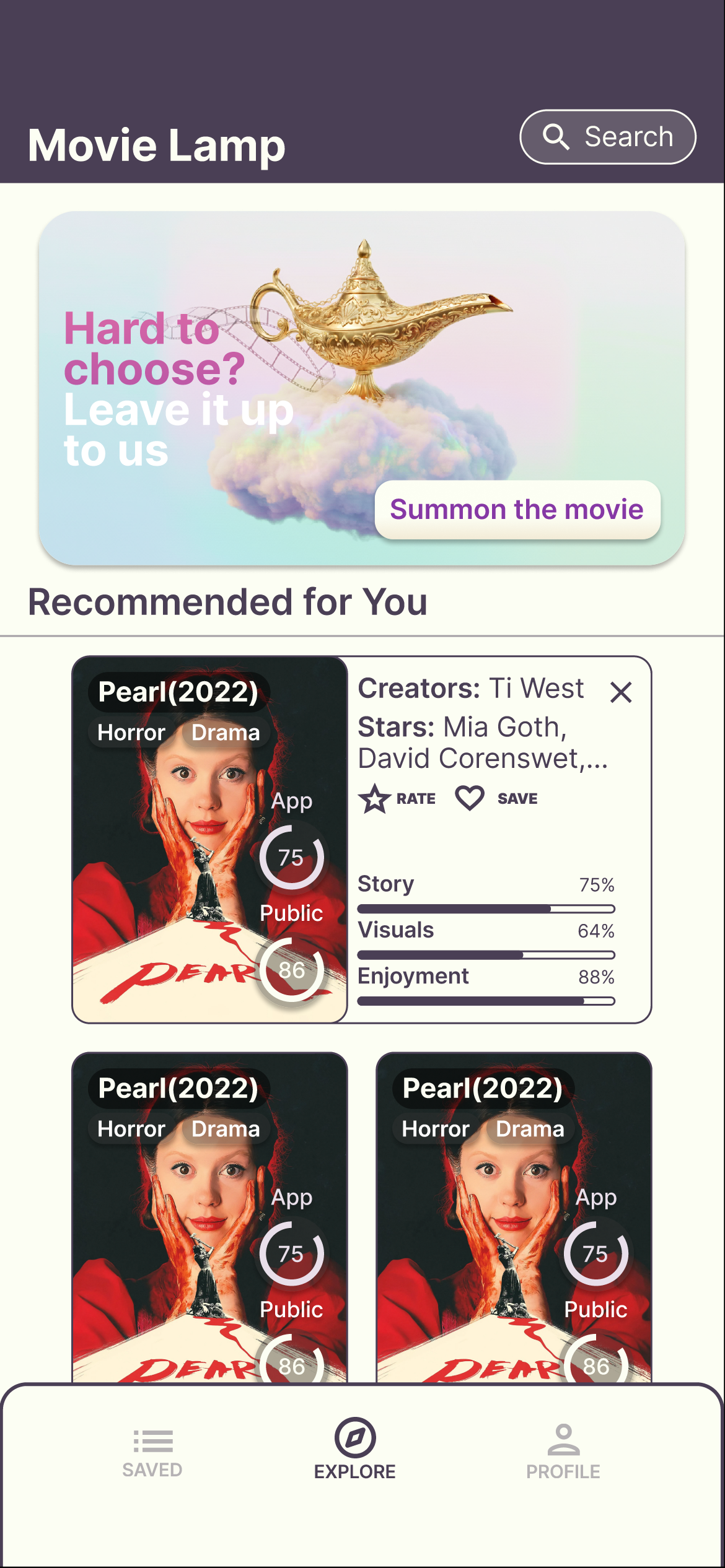
Movie Lamp Platform Overview

User Research

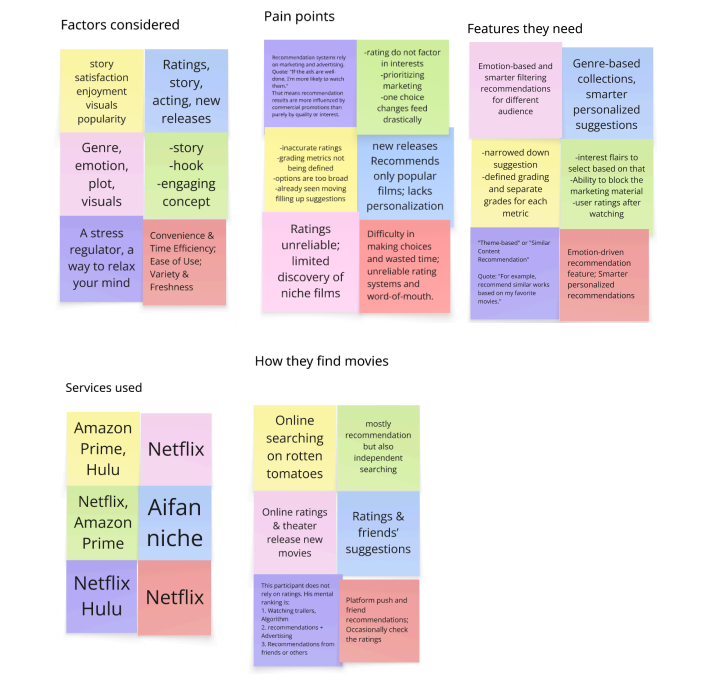
We conducted 6 semi-structured interviews to identify pain points of users, followed by affinity mapping with the results to identify key issues and focus areas.

Key Research Findings:

Need for a Dissected Rating System: Multiple interviewees discussed the inaccuracy of current rating systems and how they lack consistency overall. They specifically mentioned how this issue affects horror and comedy genres, where audience expectations vary dramatically from critical reception.

Need to Reduce Overwhelm and Decision Fatigue: Almost all of our interviewees mentioned the decision fatigue they face due to overwhelming landing pages. They expressed frustration with endless scrolling and the paradox of choice - having too many options actually makes choosing harder.

Issues with Data Collection & Privacy: Some users highlighted privacy concerns, expressing dislike for how current systems rely on tracking and "looking over the shoulder" at all times. They wanted personalization that respects their privacy and puts them in control.

Affinity Mapping Session

Competitive Analysis

We analyzed existing services to identify gaps and opportunities for differentiation:

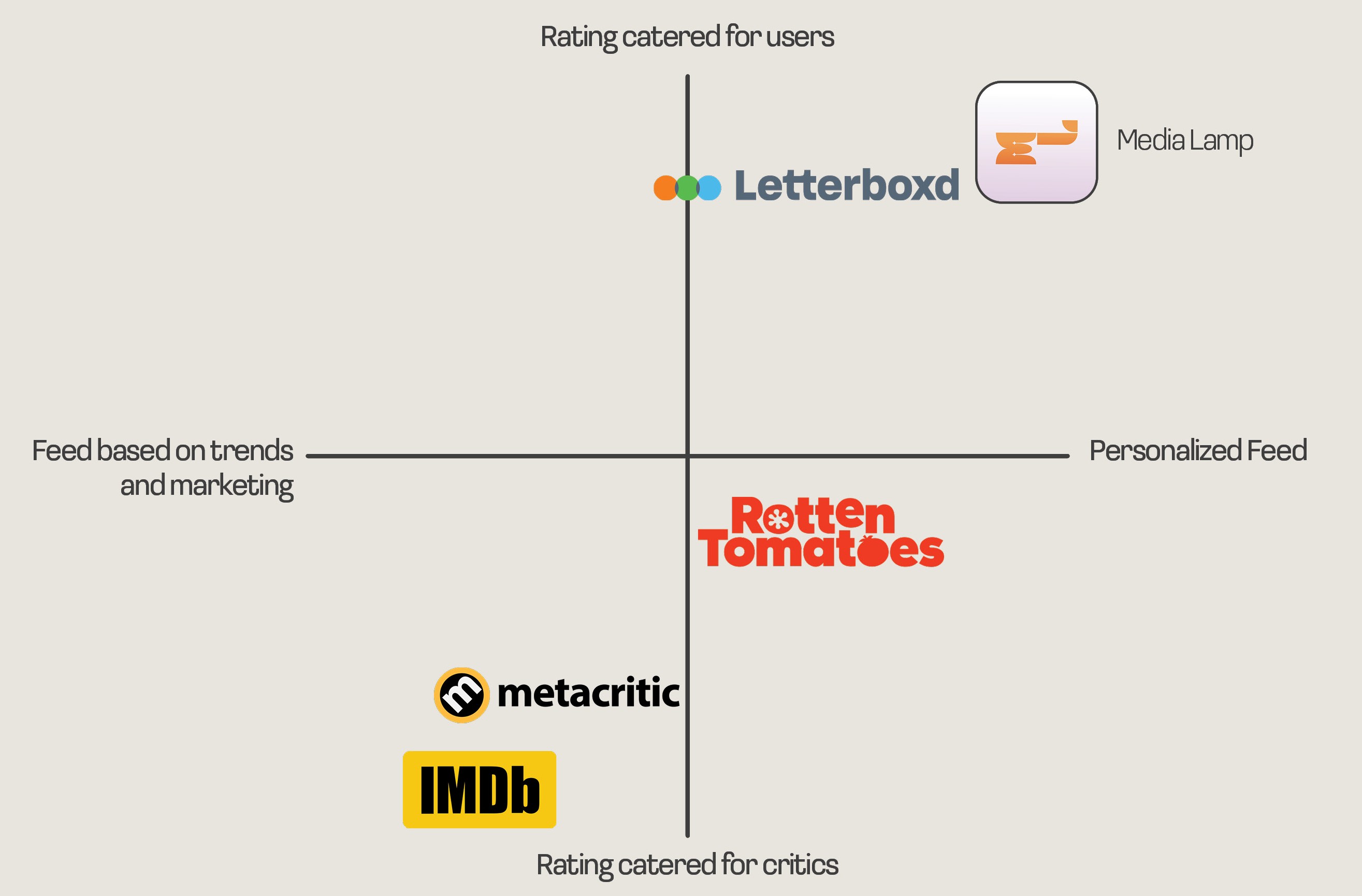
  • Letterboxd offers social features and personalization, but lacks the curated selection approach we envisioned
  • IMDb and Rotten Tomatoes provide extensive databases but rely on aggregated ratings that don't account for personal taste
  • Streaming platforms (Netflix, Hulu, etc.) prioritize their own content over genuine recommendations

Our competitive analysis matrix helped us identify that while Letterboxd overlaps with our goal of personalization, we could bring something unique to the table with our Movie Lamp feature and dissected rating system.

Competitive Analysis Matrix

User Personas

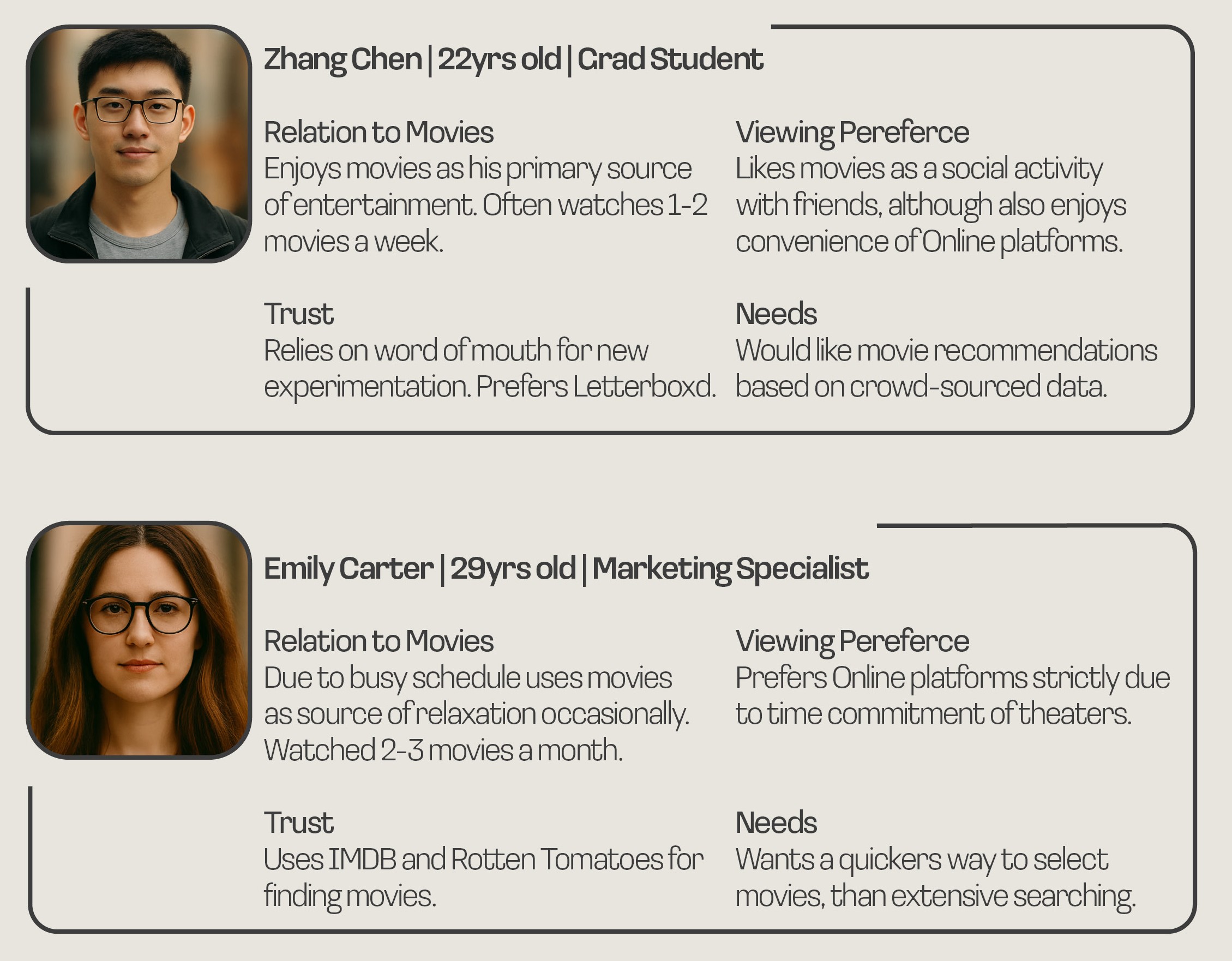
Based on our research, we developed two primary user personas to guide our design decisions.

Zhang Chen | 22 years old | Grad Student: Enjoys movies as his primary source of entertainment, watching 1-2 movies weekly. Prefers movies as a social activity but appreciates online convenience. Relies on word of mouth and prefers Letterboxd. Needs recommendations based on crowd-sourced data that respects privacy.

Emily Carter | 29 years old | Marketing Specialist: Uses movies for relaxation occasionally, watching 2-3 movies monthly. Prefers online platforms due to theater time commitment. Currently uses IMDb and Rotten Tomatoes but finds ratings unreliable. Wants a quicker way to select movies without extensive searching.

User Persona - Zhang Chen

Design Process

With the user experience, we wanted to convey a feeling of calm and reliance. Since our three-picks feature was unique among competitors, we made it the centerpiece and used the genie lamp as the inspiration for our theme.

Our theme is a magical platform to help ease the stress of choosing a movie. The primary colors in the color palette highlight magic, while the secondary theme of iridescence was selected to convey calmness. The lamp became our central focus and is used throughout the app interface and as the app icon.

Core Application Features:

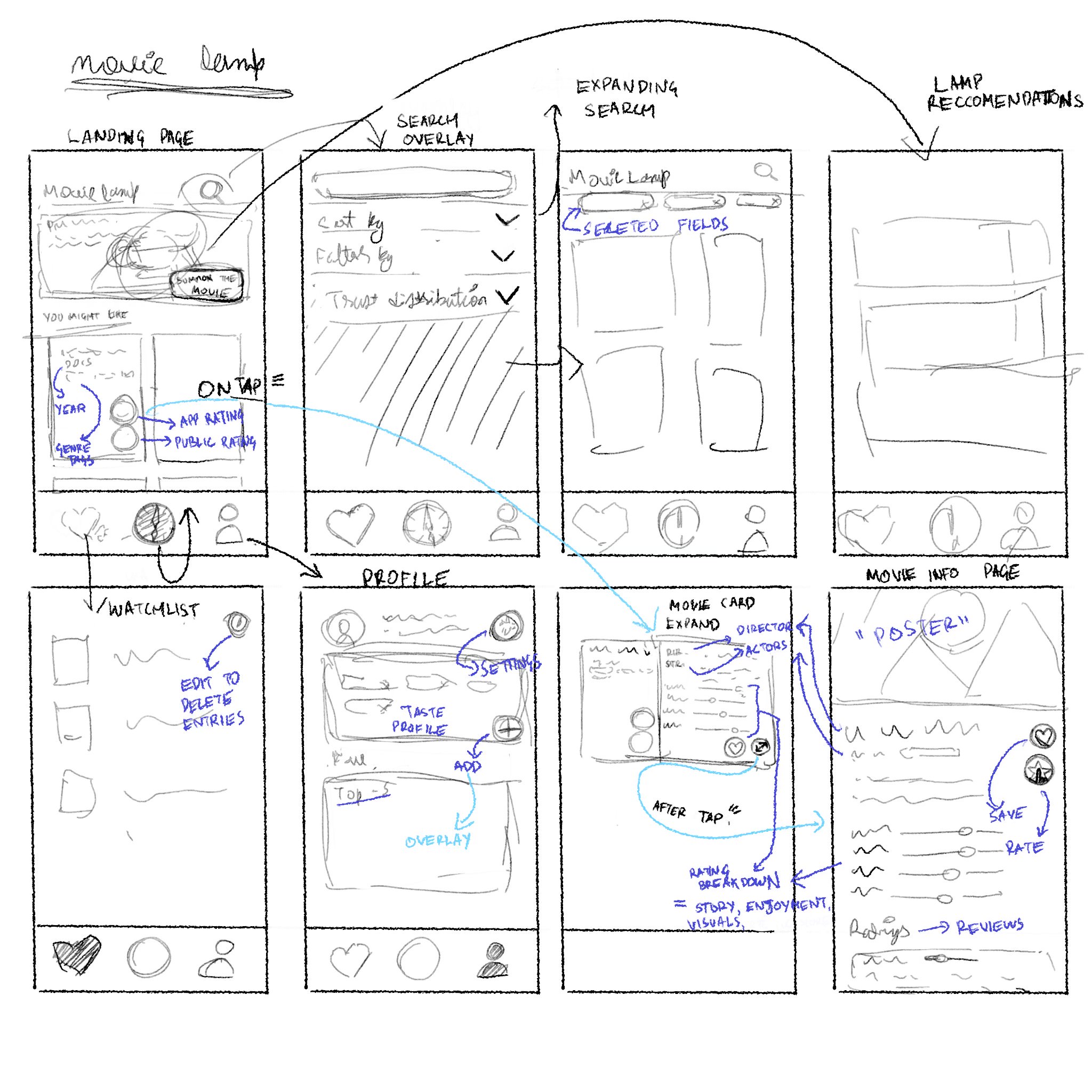
  • Dashboard: The dashboard acts as a central hub, showing movies based on your taste profile. Users can click to expand any movie card and view detailed ratings without navigating away from the page. The header features the "Summon the Movie Lamp" button as the primary call-to-action.
  • Movie Lamp Feature: This feature picks the best matches and narrows your choices to just three options. Detailed ratings are displayed by default along with genre tags. After user testing feedback, we enhanced this feature to branch into three distinct genres, making the choice even easier.
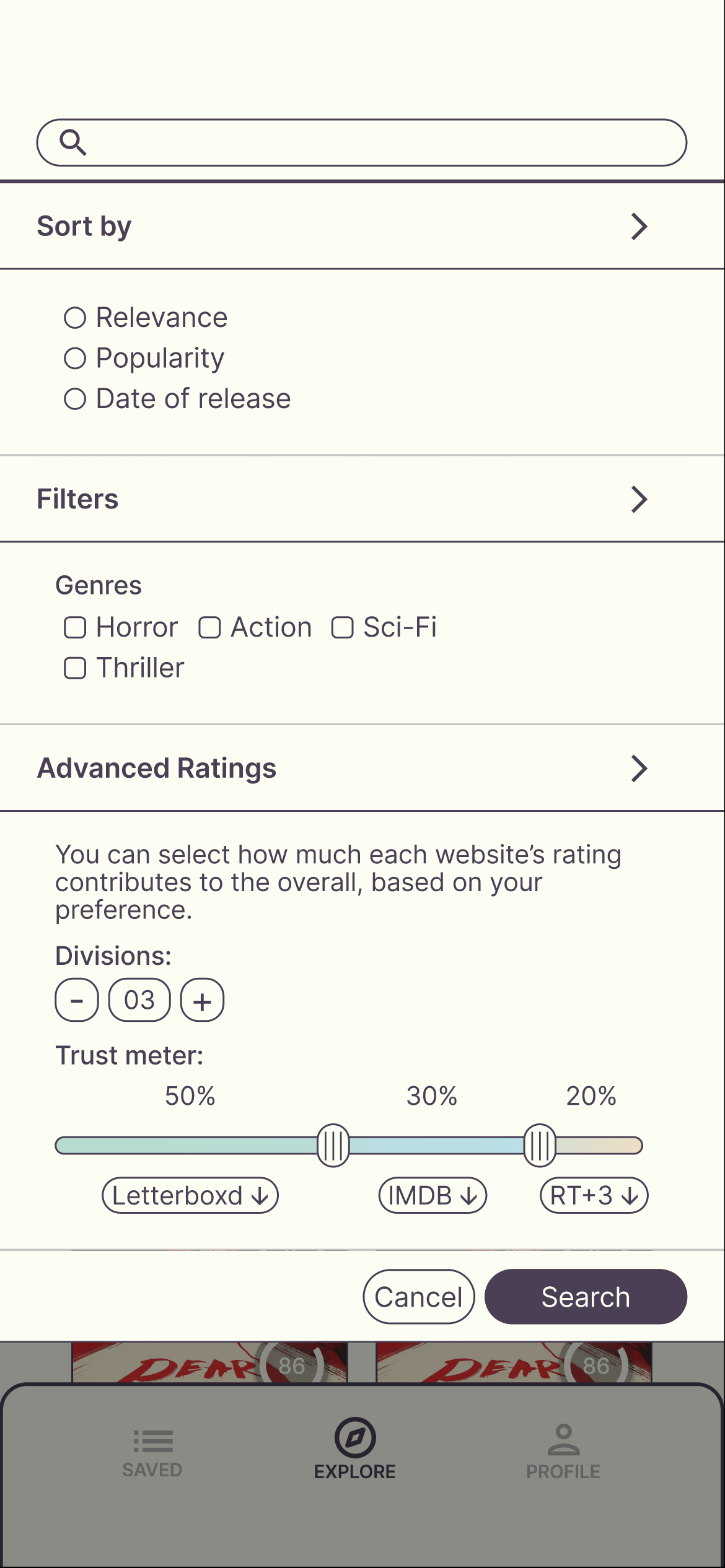
  • Taste Profile & Settings: The profile page includes customizable taste preferences that can be updated anytime. Advanced settings let users control trust levels for different rating websites, personalizing recommendations based on their preferred sources.
Movie Lamp Feature

Usability Testing

We conducted usability testing with target users to evaluate the effectiveness of our design. Our system received a score of 50 during the SUS (System Usability Scale) test. The feedback we received helped us improve the affordance of some features and rework certain sections.

Key Findings:

Issues with Affordance: The visuals for the ratings left users confused as they appeared to be sliders rather than static data visualizations. Users attempted to interact with elements that were meant to be display-only.

Confusion with Feature Usage: The purpose of some features wasn't immediately clear. The presence of two different rating systems wasn't adequately explained through labels, and users didn't understand the difference between them.

Purpose of Movie Lamp: Users pointed out that being shown three movies could still induce decision fatigue. Based on this feedback, we updated the feature to include branching through distinct genres, making the choice easier by providing clearer differentiation between options.

Future Work

Based on our testing feedback, we have identified several areas for future development:

Tooltips & First Visit Tutorials: Since some features are complex to explain, we need to implement tooltips and tutorials for better user experience. The current complexity makes it difficult for features to be intuitive at first glance.

Further Testing on Altered Features: Features like the advanced search were completely reworked based on feedback, so additional testing is needed to validate these changes and solidify the use cases.

Expansion Towards a Social Section: Given more time, we would like to transform this into a community tool, integrating features for social interactions and group movie watching experiences. This would allow friends to share recommendations and watch together remotely.

Movie Lamp

Movie Lamp

Personalized movie discovery platform

Project Overview

Movie Lamp is a movie database platform designed to solve the fundamental frustration viewers face when trying to choose what to watch. While digital platforms provide unprecedented access to vast film libraries, their core systems for discovery and recommendation are flawed, leading to wasted time and unsatisfactory experiences.

The process of selecting a movie has become a significant source of frustration. Streaming services prioritize their own affiliated content, limiting genuine choice. Users face overwhelming choice and decision fatigue, often spending more time browsing than actually watching. Aggregated ratings from sites like IMDb or Rotten Tomatoes are often unreliable indicators of personal enjoyment.

Our solution focuses on three key innovations:

  • A dissected rating system that breaks down movie quality into Story, Visuals, and Enjoyment metrics
  • A taste profile with trust meters that puts users in control of their recommendations
  • The "Movie Lamp" feature that narrows thousands of options down to three curated picks
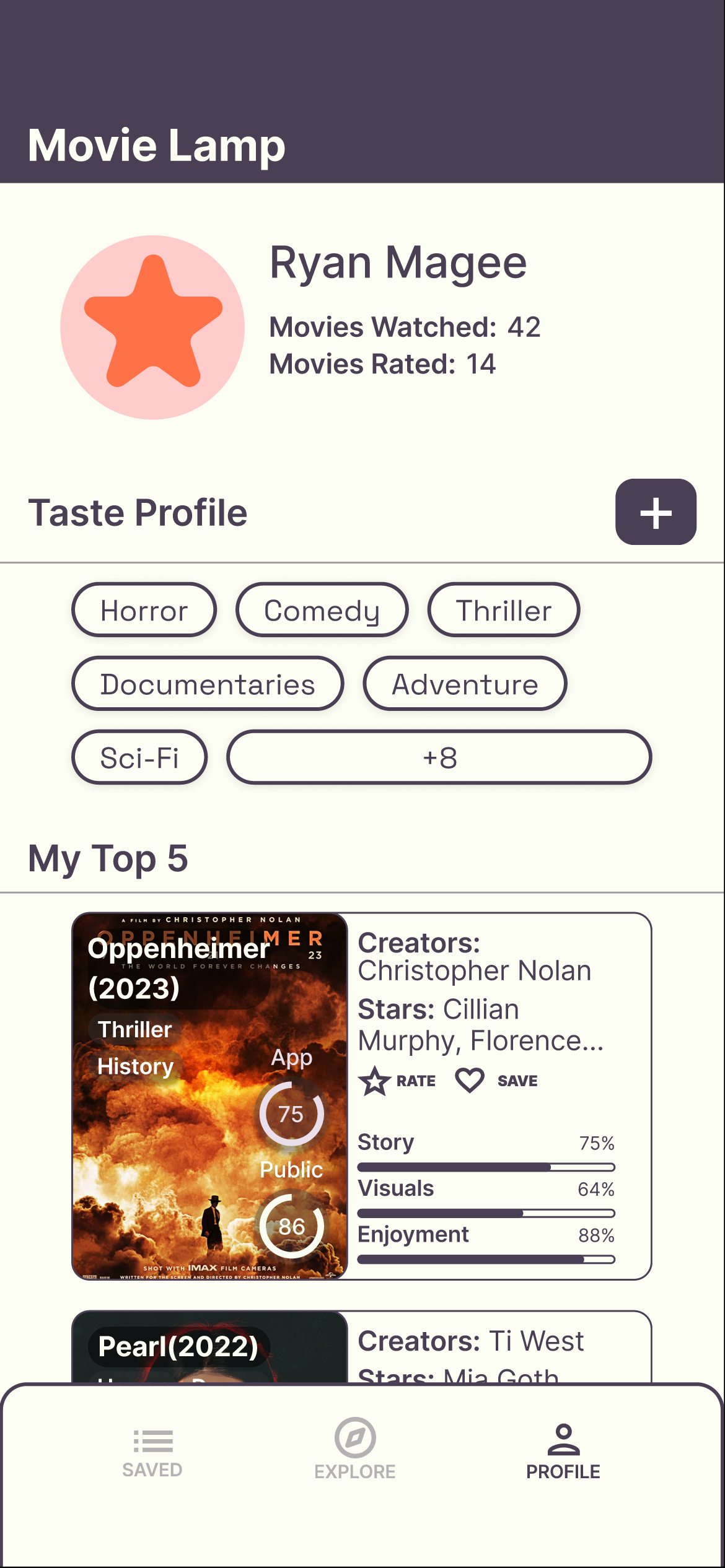
Movie Lamp Platform Overview

User Research

We conducted 6 semi-structured interviews to identify pain points of users, followed by affinity mapping with the results to identify key issues and focus areas.

Key Research Findings:

Need for a Dissected Rating System: Multiple interviewees discussed the inaccuracy of current rating systems and how they lack consistency overall. They specifically mentioned how this issue affects horror and comedy genres, where audience expectations vary dramatically from critical reception.

Need to Reduce Overwhelm and Decision Fatigue: Almost all of our interviewees mentioned the decision fatigue they face due to overwhelming landing pages. They expressed frustration with endless scrolling and the paradox of choice - having too many options actually makes choosing harder.

Issues with Data Collection & Privacy: Some users highlighted privacy concerns, expressing dislike for how current systems rely on tracking and "looking over the shoulder" at all times. They wanted personalization that respects their privacy and puts them in control.

Affinity Mapping Session

Competitive Analysis

We analyzed existing services to identify gaps and opportunities for differentiation:

  • Letterboxd offers social features and personalization, but lacks the curated selection approach we envisioned
  • IMDb and Rotten Tomatoes provide extensive databases but rely on aggregated ratings that don't account for personal taste
  • Streaming platforms (Netflix, Hulu, etc.) prioritize their own content over genuine recommendations

Our competitive analysis matrix helped us identify that while Letterboxd overlaps with our goal of personalization, we could bring something unique to the table with our Movie Lamp feature and dissected rating system.

Competitive Analysis Matrix

User Personas

Based on our research, we developed two primary user personas to guide our design decisions.

Zhang Chen | 22 years old | Grad Student: Enjoys movies as his primary source of entertainment, watching 1-2 movies weekly. Prefers movies as a social activity but appreciates online convenience. Relies on word of mouth and prefers Letterboxd. Needs recommendations based on crowd-sourced data that respects privacy.

Emily Carter | 29 years old | Marketing Specialist: Uses movies for relaxation occasionally, watching 2-3 movies monthly. Prefers online platforms due to theater time commitment. Currently uses IMDb and Rotten Tomatoes but finds ratings unreliable. Wants a quicker way to select movies without extensive searching.

User Persona - Zhang Chen

Design Process

With the user experience, we wanted to convey a feeling of calm and reliance. Since our three-picks feature was unique among competitors, we made it the centerpiece and used the genie lamp as the inspiration for our theme.

Our theme is a magical platform to help ease the stress of choosing a movie. The primary colors in the color palette highlight magic, while the secondary theme of iridescence was selected to convey calmness. The lamp became our central focus and is used throughout the app interface and as the app icon.

Core Application Features:

  • Dashboard: The dashboard acts as a central hub, showing movies based on your taste profile. Users can click to expand any movie card and view detailed ratings without navigating away from the page. The header features the "Summon the Movie Lamp" button as the primary call-to-action.
  • Movie Lamp Feature: This feature picks the best matches and narrows your choices to just three options. Detailed ratings are displayed by default along with genre tags. After user testing feedback, we enhanced this feature to branch into three distinct genres, making the choice even easier.
  • Taste Profile & Settings: The profile page includes customizable taste preferences that can be updated anytime. Advanced settings let users control trust levels for different rating websites, personalizing recommendations based on their preferred sources.
Movie Lamp Feature

Usability Testing

We conducted usability testing with target users to evaluate the effectiveness of our design. Our system received a score of 50 during the SUS (System Usability Scale) test. The feedback we received helped us improve the affordance of some features and rework certain sections.

Key Findings:

Issues with Affordance: The visuals for the ratings left users confused as they appeared to be sliders rather than static data visualizations. Users attempted to interact with elements that were meant to be display-only.

Confusion with Feature Usage: The purpose of some features wasn't immediately clear. The presence of two different rating systems wasn't adequately explained through labels, and users didn't understand the difference between them.

Purpose of Movie Lamp: Users pointed out that being shown three movies could still induce decision fatigue. Based on this feedback, we updated the feature to include branching through distinct genres, making the choice easier by providing clearer differentiation between options.

Future Work

Based on our testing feedback, we have identified several areas for future development:

Tooltips & First Visit Tutorials: Since some features are complex to explain, we need to implement tooltips and tutorials for better user experience. The current complexity makes it difficult for features to be intuitive at first glance.

Further Testing on Altered Features: Features like the advanced search were completely reworked based on feedback, so additional testing is needed to validate these changes and solidify the use cases.

Expansion Towards a Social Section: Given more time, we would like to transform this into a community tool, integrating features for social interactions and group movie watching experiences. This would allow friends to share recommendations and watch together remotely.